
On dysfunction of very senior teams

Lots is written about the dysfunction of the team that Trump has assembled: backstabbing, turnover, intrigue seem to be common. Not very surprising and not very new.

This post will spell out a few reasons why I believe that dysfunction is so frequently  “built into” the genetic code of very  senior teams. Severe dysfunction at the most senior level is something that I expect. I am very surprised when this is not the case.

First however, a small historical anecdote.  At the beginning of the 20th century, very senior competing officialdom in England botched up the middle east for more than one hundred years by issuing in parallel conflicting and diametrically  opposed policies such as the  McMahon-Hussein correspondence  and the Sykes Picot agreement. This dysfunction has caused endless chaos and countless wars. We are not anywhere close to extricating ourselves from this mess which was caused in great part to the most severe senior dysfunction at the senior level of the British administration.

Jumping forward in time, I will provide my observations about why very senior teams have such severe dysfunction.

  1. Senior leaders have limited time, so gatekeepers have more power than experts, a critical component for creating severe friction.
  2. It is VERY common for the guy at the top to be an extremely paranoid player who plays one team member (and interest) against the other as a default. It is very hard to get to the top if you don’t have this skill. Those who float to the top are a special breed; they are extremely adept political animals who shift blame with great skill. The glory (when created) goes to the leader; the blame is shifted downwards. So there is often nothing to gain and much to lose by being a team player. 
  3. People who work with senior leaders learn to be sycophants who please the leader almost to the exclusion of all others.
  4. Many senior leaders want the people around them to churn  out of the organization every so often, thus eliminating the creation of alternative power bases. So they create a rotating exit door to keep the power of others at bay.

The sun rises, and the sun goes down,and hastens to the place where it rises.
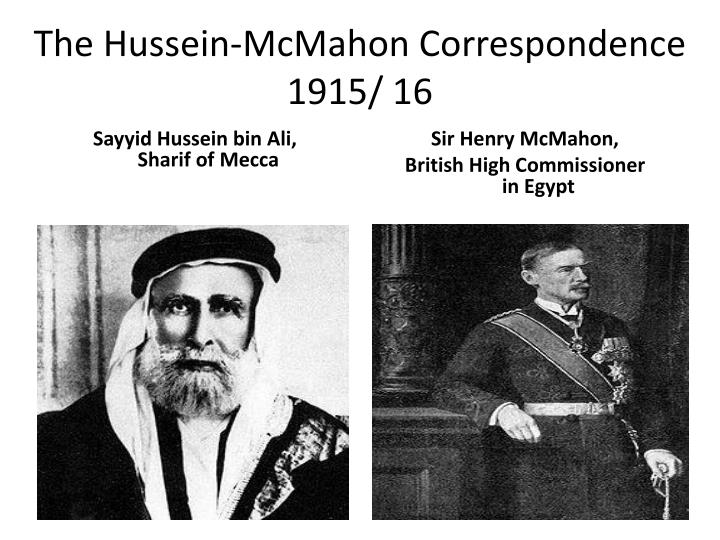
 

From Wiki-Help Britain fight Turkey and gain independance
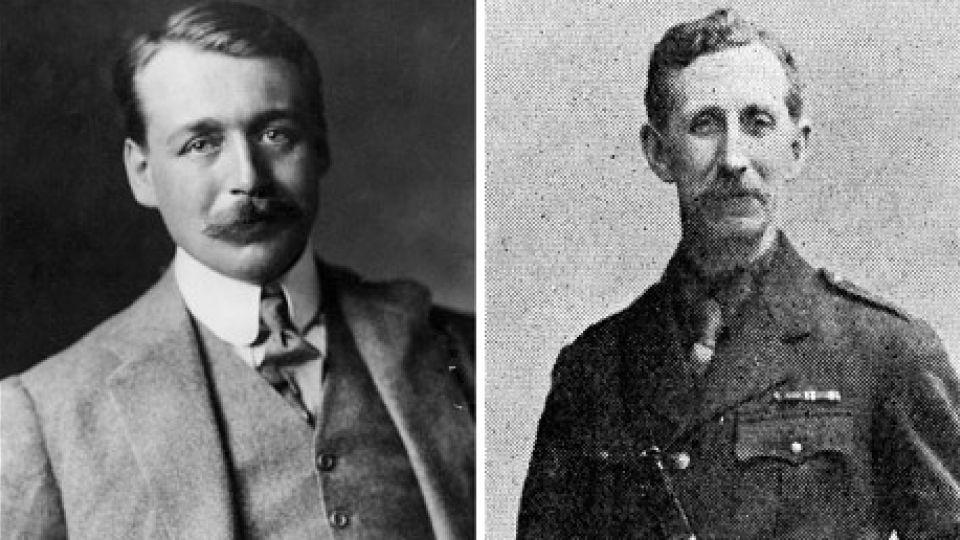
 

Sykes Picot (from Wiki) Divide the Middle East between England and France per “areas of influence”



Share Button

How well do we get to know virtual colleagues?

Eleanor Rigby…
Waits at the window, wearing the face
That she keeps in a jar by the door
Who is it for
All the lonely people
Where do they all come from?
                                                  (lyrics from The Beatles)

There are many tools that enable people to communicate/work together in a virtual environment. Personally I have used Skype, Whats App video, and many other high quality methods of video conferencing. And yes, these tools work, but how well do they work for everyone? How much depth is lost when we use gadgets to communicate?

It has been claimed that it is possible to get to know and trust ones’ colleagues very well, without any  face to face contact. Even the renouned psychiatrist Irvin Yalom now touts the virtue of psychotherapy via texting in his latest book Becoming Myself.

However for me, nothing but nothing replaces face to face contact.

There was an Israeli prime minister (Eshkol) who wisely warned against making “a tragedy into an ideology”. So whilst virtual communication is now the norm, it sure isn’t the “communication venue of choice” that brings out the best of me.

I have been told by people who have met me after years of virtual communication that they are surprised that I am a warm, compassionate person. Until we have met,  I often come across only as brash, bright and/or an aggravating contrarian. And yes, I do have a good sense of humour and write a satirical blog, but I am rather a “serious type” in conversation. And I had another surprise last year when a client with whom I had worked remotely told me that “I am surprised how much I like speaking with you face to face; sometimes I tried to avoid the calls we had scheduled .”

So while global configuration mandates constant virtual communication, I’m not done travelling yet, despite the delays, security checks, loss of baggage and horrendous scheduled  hours of take off and landing.


Share Button

Why don’t Israelis value planning?

The Israeli disdain for planning is legendary. It has been suggested that Israelis know how to extract themselves from situations which they could have avoided via basic foresight. Many Israelis would agree, but planning takes a back seat to doing and fixing it later. Lack of planning is not exactly only a ‘lack”; it is a disdain.

The goal of this post is to suggest root causes as to the cultural preference to do without planning. Following is some standard Israeli logic about planning.

  1. When speed is strategy, planning is seen as a luxury. And in Israel, speed indeed is strategy.
  2. The culture is of risk taking, and punitive measures following failure are relatively rare. So planning is not perceived as a necessity.
  3. Planning is something that “they” should do; then we can outsmart them.
  4. The environment is not predictable; we can only adapt to changes of the world around us, so planning can encourage rigidity.
  5. One needs to do a little bit of planning all the time, The best time to plan is after doing. At that point, some thought can be given to planning. Then, continue doing. Subsequently,  all planning decisions made in planning can be reopened, since all decisions are reversible.
  6. If we plan too much we may become too predicable and transparent, we can be fooled.
  7. Relying on systematic planning is far less reliable that relying on human ingenuity.
  8. Lack of planning can be compensated for by tightly knit team work of high performers and constant and intense communication.

I have worked with countless America, German, Dutch and Canadian managers who have tried to get the Israelis whom they manage to plan more. It is a hard uphill run.

Share Button

Frequent follow up, trust and culture

Lee  is the Tel Aviv based manager of Paul (USA), Lars (Denmark) and Shaul (Tel Aviv).

Lee has asked all of her three direct reports to submit a report within 2 weeks detailing all known risks in the next two quarters. These risks are to be discussed at a critical meeting with investors in one month.

Lee is very anxious; on one hand the risks must be transparent, because any big surprise will mean her ass is on the line. On the other hand, too much risk may mean the end of funding. As a result of the pressure she is under, Lee has not been sleeping well, so she decides to call all three almost on a daily basis to see how their risk analysis report is coming along.

Shaul has no problem with Lee’s frequent follow up. It is a sign that she cares. As a result of Lee’s intensive follow up. Shaul and Lee have had some interesting chats which have shed light on risks that are more red herrings than real risks.

Lars resents daily follow up. He feels that Lee may not trust him; Lee’s style projects the constant hounding he feels from his anxiety driven pushy boss. Lars is working very hard on his document and plans to get it to her before schedule, especially if she leaves him alone.

Paul wishes that his former boss James had not been replaced by Lee when James quit. James trusted people, or replaced them. But Paul has worked with Israeli managers before. He knows that they love to dig into the details. He also knows that Lee trusts him. He also recognizes that Lee is stressed out. So when Lee calls Paul to follow up, Paul asks Lee how high her blood pressure is, and then asks her if she wants to fly over to San Francisco ‘and do my work instead of me’. Lee lays off nagging for a while, but wishes that Paul was “not so American”.

Frequent follow up can generate a feeling of mistrust on the part of the employee. But also frequent follow up can indicate caring and generate informal dialogue. Often frequent follow up is a sign that the manager is under a feel of stress.

I am sure that some people are asking themselves, ‘how can frequent follow up indicate caring?’ It goes like this. The boss give you a task, you have many tasks. You may think, does the boss really want this done? Is she/he serious about this?  The boss nags. Now my priorities are clear. I need to do it. And I will use the frequent nagging to my benefit to discuss the issues with her. That will prevent rework of my report.

Got it? 🙂 If not, keep reading my blog. Merci!

Share Button

Competency trumps culture and gender

Recently a CEO hired me to sit in on 5 meetings of his senior management team. The team consists of executives from the USA, Canada, France, Israel, Singapore and Tokyo. There are both men and women in this team; the men tend to be older than the women.

The CEO was surprised when I shared my findings. He had expected that I would discuss the dynamic whereby a certain younger female US based executive constantly criticizes Asia based managers on their lack of transparency. He also expected to hear from me about the poor communication, which is rooted in the vast cultural differences.

My feedback related to the gap between the professional competency of the staff. Clearly, there were team members who were highly experienced and professional, and others who did not know the difference between their ass and their elbow. Two examples will suffice; one female executive had no answers whatsoever to questions she was asked and constantly asked to “check with my people and get back to you”.  One male executive used empty slogans to address complex problems, claiming that “if we just get on the same page, we can tackle the problem, as a team”.

My suggestion to consultants is as follows: cultural and gender differences are important, all things being equal. Things in this case being competence. If there is a huge variance in levels of competence, culture and gender may appear important, but they aren’t. Nothing trumps competence.

Example-

Israel based Daniel, head of research and development, constantly locks horns with US based CFO Jeanette in management meetings. Daniel claims that Jeanette needs to learn what questions to ask; he refuses to answer any question without first cutting her down.

Jeanette came from an investment bank and clearly does not yet understand the intricacies of budgeting R&D.  Furthermore Jeanette does not have her hands on the steering wheel; she is “fed” by an Israel based accountant who basically deals with authorizing purchase requests. The problem indeed is Jeanette’s competency, not Daniel’s style nor Jeanette’s gender.


Share Button

Opinions and facts in global organizations

Some but not  all people, distinguish carefully between facts and opinions; for these people there is a time to understand and a time to make a form an opinion.

For other people, stakes (opinions) are put in the ground  after which appropriate facts are sought out to support the opinion. For such people, all the facts, or the wrong facts, are plain damaging, because truth is not what the facts are, but what they should be. (This was very common in Communist art).

And for some people, facts are lies, because the facts display what Marx called a false consciousness, meaning that people perceive what they should not be perceiving.

In global organizations one can often find people from various cultural backgrounds who view opinions and facts very differently.

  • Einat from Israel changes her strongly held opinions many times in a discussion and finally, she agrees on the facts.
  • Nick from the US, believes that facts come before opinions, the former being the basis of the latter.
  • Hans from Munich believes that a grasp of the facts, and all of them, serve the basis for making rational choices, rather than personal opinions.
  • Wong from Beijing believes that  selective facts and  opinions must serve his bosses’ goals.
  • Sergei from Moscow believes that facts and opinions are very often manipulated to serve deep rooted interests, and that it is critical to understand what these interests are and act accordingly. For Sergei, initial facts and opinions are both raw intelligence data.
  • For Som from Bangkok, facts which may embarrass anyone are not real facts; they need to be distorted to maintain a feeling of positiveness and comfort, which serve the ultimate truth of avoiding shame at all costs.

In global organizations, these differences need to factored into so called  models of problem solving.


Share Button

The selective death of shame

Sexual harassment is a major  issue in organizations and justifiably so. Shame and shaming  play a meaningful role in the anti harassment effort; all sexual harassment must end hopefully without sterilizing the work environment as described in the Mikado by Gilbert and Sullivan-

Our great Mikado, virtuous man,
When he to rule our land began,
Resolved to try
A plan whereby
Young men might best be steadied.

So he decreed, in words succinct,
That all who flirted, leered or winked
(Unless connubially linked),
Should forthwith be beheaded.

And I expect you’ll all agree
That he was right to so decree.

However in many area of organizational life, shame is dead.  Here are just a few examples that come to mind. The great push for job-eliminating technology; the masquerading of unemployment as the gig economy. Health care gets better the higher you are ranked in the organization. Management buys new gadgets whilst cutting benefits to labour. Management flies first class, or business, absolving themselves from company travel policy. Reduction in force is carried out whilst senior management is on ski vacation. The list goes on and on. (I forgot to mention pay gaps between the plebs and the patricians).

Certain OD consultants and many HR-cum-spinner business partners serve as pacifiers for these ugly phenomenon which impact more than  one gender.

HR is the classic servant of the status quo, so I do not expect them to challenge anything like the issues I describe.  HR will often “bless it and approve it with a text, hiding the grossness with fair ornament.” (Shakespeare, Merchant of Venice)

OD practitioners who sell commercialized products are probably making a living doing engagement surveys which “test” the waters letting management know how hot the water is. Or perhaps they are doing “coaching” to under-performers. Or perhaps cross dressing as change managers for a new reorg.

Shame/shaming is every so rare, because there is no real challenge to the present economic model and the derivative organizations forms which serve the economic model.

I do hope that shaming will eventually address these issues, because it a very effective tool. But OD won’t be there. Our values died when we stopped being contrarians and jumped into bed with HR business partners. And pardon me for saying “bed”.

Share Button

10 basic components of Organization Development (updated)

Continue reading

Share Button

Why American managers often fail managing Israelis

American managers, whether they relocate to Israel or not, have a dismal track record managing Israeli organizations and/or their Israel based subsidiary which is more often than not a development team.

In this post, I will point out several  reasons for this ongoing failure.

Israelis do not believe that organizational systems (or any system) work. Israelis hedge system failure/rigidity with an intense set of relationships which serve as shock absorbers for rigid and corrupt bureaucracies. In order to get things done, you need to know the right people, not master the system. American managers often focus time and effort on getting Israelis to follow process, which is next to impossible.

Israelis argue as a way of life. Although this arguing often sounds aggressive and impeding of cohesion, it is not. Arguing is a way of working out the pros and cons whilst thinking out loud, weighing all sides of the equation using forceful opinions that change constantly. Many American managers simply cannot adapt to this “tribal” method of communication.

Israelis, due to a siege mentality, do not value planning. They prefer improvisation and excel extricating themselves from situations that could have been avoided by basic planning mechanisms. The disdain for planning drives American managers around the bend.

Israelis constantly challenge authority of their managers. Almost nothing and no one goes unchallenged. Israelis are used to this constant push back and it does not phase them. American managers get very angry when day after day and hour after hour, they need to deal with what they see as “lip”.

Finally, Israelis rarely see decisions are final. Decisions are viewed as tentative and temporary, and thus, decisions are almost always “revisited” many many times before implementation. This behaviour erodes the trust of the American manager, who often believes that a decision should lead to implementation.

Share Button

Explaining the unique Israeli term “frayer”

Adi (m) writes promotional material against very aggressive deadlines; his boss Segal (f) always has more corrections and suggestions. Adi has learnt not to submit material to Segal too early in order not to be dragged over the coals too many times. “I am not Segal’s frayer”, she explained to me.

Corporate purchasing policy now requires all purchases over $500 to be extensively justified. Local Israeli CEO Alon has instructed “that it is better to buy two printers at $499 each than one good printer at $501. “I don’t want us to be corporate’s frayers”.

6 parking spots have been set aside “for visiting dignitaries”, These spots are constantly used by regular employees in the summer heat because employees “don’t agree to be anyone’s frayer”.

Some people have suggested that frayer is a sucker, patsy, dupe or a naive innocent. My belief is that the word “frayer” cannot be well  translated, because it relates to a unique Israeli characteristic, like rosh gadol, which I explained in a previous post.

Here are the basic components of the frayer.

  1. “Systems” screw people, so be wary and outsmart the system. If not, you are a frayer.
  2.  The early bird gets the worm; other birds (frayers) die of hunger. The loser (frayer) gets knocked out; he never loses on points. So knock out or get knocked out. Fight or die.
  3. Don’t  leave yourself open to exploitation; the world is a cruel place.

Have you understood this article? If not tough luck. I am not going to be your frayer. My explanation is clear enough!  🙂 🙂

And a note for non Israelis managing Israelis. Here are 3 tips that will lessen the chance that your native Israeli will think you are making him/her into a frayer.

  1. Lead by personal example.
  2. Rank and station give you no head start. Earn your stripes every day as you march along.
  3. Show respect: give information, explain, and don’t hide behind your boss.
  4. Be tough. After you have been fair, be brutal if needed.


Share Button